Davos 2026 Recap: Trump’s Return, The AI Power Crunch, and Japan’s Bold Crypto Pivot
【この記事にはPRを含む場合があります】
“The secret cabal decides the fate of the world here.” “A meeting where elites pull the strings of the global economy.”
Every January, social media feeds in the U.S. light up with rumors about a snow-covered town in the Swiss Alps. That town is Davos, home to the World Economic Forum (WEF)—and yes, it is exactly where the world’s heavy hitters gather to shake hands and shape the future.
But this year, the script was flipped. Davos 2026 was nothing short of chaotic, shattering the polite norms of previous years. From the return of President Donald Trump to the terrifying speed of AI evolution, and a surprisingly dominant performance by a Japanese minister, the 2026 summit gave us plenty to talk about—both in the boardroom and on the conspiracy forums.
If you’re wondering, “How does this actually affect my wallet or my life?” you’re not alone. Let’s cut through the noise and break down exactly what happened at Davos 2026 and what it means for the U.S. and the world.

What Actually Happens at Davos? (Beyond the Memes)
While often called “The Davos Meeting,” the official event is the Annual Meeting of the World Economic Forum. Held in the ski resort town of Davos, Switzerland, it transforms a quiet village into the center of the geopolitical universe every January.
The 2026 summit ran from January 19th to 23rd, gathering politicians, Fortune 500 CEOs, academics, and journalists. It’s often joked about as “the world’s most expensive networking event,” but the reality is that the conversations happening over coffee here often become international policy a few years down the line.
With its founder Klaus Schwab stepping down in 2025, the organization is also in a major transition period, now led by President Børge Brende and his team.
The Fuel for “Urban Legends”
Why is American internet culture so obsessed with Davos? It stems from past themes like “The Great Reset” and the infamous slogan, “You will own nothing, and you will be happy.” These phrases have made the WEF a magnet for theories about a “One World Government” or elites seizing private property.
Add in the invite-only exclusivity and ticket prices ranging in the hundreds of thousands of dollars, and it’s easy to see why it feels like a secret society meeting in plain sight.

The Surprise from Japan: Minister Katayama Steals the Show

Usually, Japanese diplomats at international forums are known for being reserved and relying heavily on interpreters. Not this year.
Satsuki Katayama, Japan’s Finance Minister in 2026, stunned attendees by engaging in fierce debates with global leaders in fluent, unassisted English. During a session titled “Japan’s Turn,” she made waves with comments that resonated deeply with American conservative and financial interests:
- On Immigration: In stark contrast to European open-border policies, Katayama declared Japan would focus on “quality over quantity.” Her stance—”We welcome good friends, but exclude those who break the law”—drew surprise and praise for its clarity and firmness.
- On Crypto & Stablecoins: In a move that shocked the traditional finance world, a sitting Finance Minister explicitly discussed the future of stablecoins peggable to the Dollar and Yen. Her acknowledgment of the crypto market’s legitimacy was a bullish signal for digital asset investors worldwide.

The Agenda: Why You Should Care
Beyond the speeches, what is the point of this gathering?
- Setting the Global Agenda: Concepts like ESG investing and the SDGs (Sustainable Development Goals) gained traction here before becoming corporate buzzwords. Davos decides what the world will worry about for the next five years.
- Business & Deals: It is a massive trade show for diplomacy. Behind closed doors, real deals—like who gets the contracts for Ukraine’s reconstruction—are negotiated.
- Risk Radar: In 2026, the focus shifted to the risks of AI, geopolitical conflict, and climate change.

The 3 Big Shocks of Davos 2026

The 2026 summit wasn’t about polite idealism. It was raw, real, and driven by market forces. Here are the three major takeaways that are already moving the S&P 500 and global politics.
1.The Trump “Hijack”
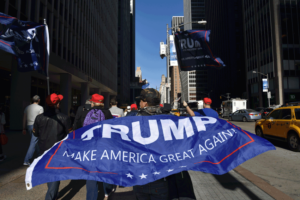
The undisputed star of Davos 2026 was President Donald Trump. He arrived with a massive entourage and effectively “hijacked” the narrative, rejecting the globalist, green values the WEF traditionally promotes.
- The Greenland Purchase (Again): Trump reiterated his desire for the U.S. to acquire Greenland for national security, sparking immediate backlash from Europe. He briefly threatened tariffs on opposing nations, sending jitters through the markets, before settling down.
- “Decarbonization is a Scam”: In the heart of the climate movement, Trump declared decarbonization a “new scam.” He touted U.S. oil and gas production as the cure for inflation, leaving environmentalists stunned.
- A New Order: He signaled a move away from the UN, proposing a new, U.S.-led framework for peace.
Trump’s message was clear: National interest and pragmatism now trump globalist ideals.
2. The AI Reality Check: Musk vs. Huang
The conversation on Artificial Intelligence moved from “hype” to “physical limits.”
- Elon Musk predicted that AI would surpass human intelligence as early as 2026 or 2027, hinting at deep integration with the space industry.
- Jensen Huang (NVIDIA) brought the room back to earth with a physical problem: Energy. He pointed out that AI data centers consume as much power as small cities. “The evolution of AI depends on how we secure energy,” Huang noted.
The Takeaway: The next global superpower won’t just be the one with the best code, but the one with the cheapest, most stable electricity. This has reignited interest in nuclear power and fusion as essential tech infrastructure.
3. The Era of “Transactional Realism”
The buzzword of 2026 is “Transactional Realism.” Gone are the days of “cooperating for the sake of humanity.” The new rule is: “I’ll give you this if you give me that.” Even leaders like former central banker Mark Carney admitted that the rules-based international order is crumbling. Nations are realizing they can no longer blindly rely on the U.S. or Europe for protection; they must make their own deals to survive.
Conclusion: A Drier, More “Real” World
Davos 2026 marked a turning point from a venue of “high ideals” to a marketplace of “hard deals.”
With Trump’s “America First” approach driving global sentiment and the AI race turning into an energy war, the world is becoming more transactional. Japan’s pivot under Minister Katayama shows that even traditional allies are carving out their own independent paths.
Don’t dismiss Davos as just elite noise. When you see news from the Swiss Alps, pay attention. The trends set there—whether it’s the price of energy, the regulation of crypto, or the direction of U.S. foreign policy—will eventually end up on your doorstep.

- Warning: Fake 7-Zip Sites Are Topping Search Results – How to Spot the Real Deal and Stay Safe
- What is Physical AI? The 2026 Trend That Will Revolutionize Robotics and Daily Life