


What is Physical AI? The 2026 Trend That Will Revolutionize Robotics and Daily Life
[This article may contain PR]
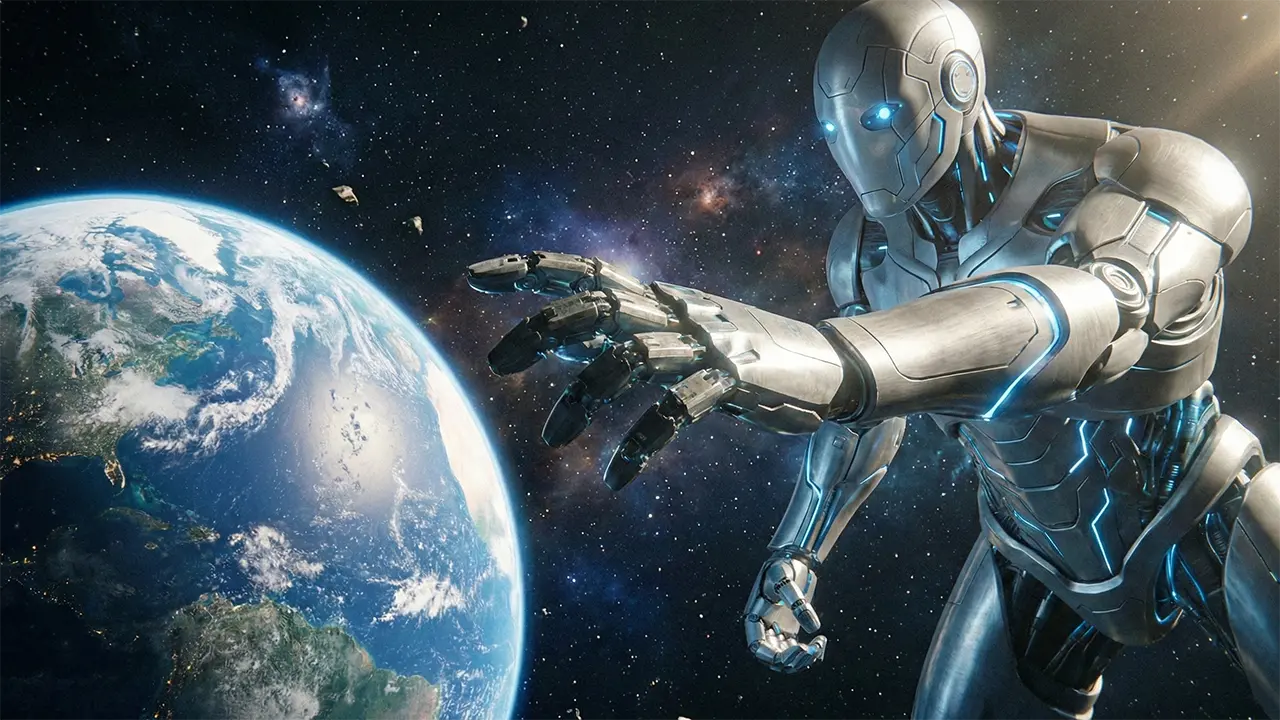

Have you noticed the buzz around “Physical AI”?
While 2025 has been dominated by headlines about Generative AI and AI Agents, the tech world is already looking ahead. Experts predict that from 2026 onwards, the next massive wave of innovation will be Physical AI.
Until now, AI has lived primarily behind our screens. But soon, it is gaining a physical body and stepping into our reality. With NVIDIA CEO Jensen Huang declaring that the wave of Physical AI is imminent, we are standing on the brink of a “Big Bang” in robotics.
If you’ve been wondering how this differs from the AI we use today, or how it might impact the stock market and your daily routine, you’re in the right place. Here is a breakdown of what Physical AI is, how it will change the way we live and work, and the key players driving this revolution.
- What is Physical AI? (It’s Not Just ChatGPT)
- Life with Robots: From Chores to Healthcare
- The End of "Invisible Labor"
- A New Era for Healthcare and Elder Care
- The Robot You Already Know: Autonomous Vehicles
- Beyond the Smartphone: The "AI Device"
- The Industrial Revolution 2.0: Logistics and Construction
- Investment Insight: The "Hidden" Hardware Plays
- The Future is Almost Here
What is Physical AI? (It’s Not Just ChatGPT)
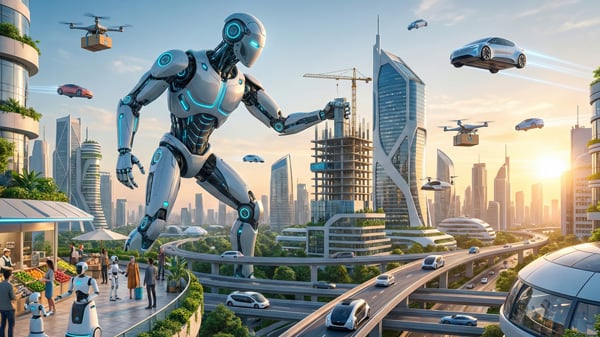
In simple terms, Physical AI is an AI system that can perceive, understand, and interact autonomously with the physical world.
Generative AI (like ChatGPT) excels at creating text and images within the digital confines of your smartphone or laptop. Physical AI changes the game by using “eyes” and “ears” (cameras and sensors) to grasp its surroundings and a “body” (robotic arms, wheels, or legs) to manipulate objects, move around, and perform tasks in the real world.
How It Outsmarts Traditional Robots
Old-school robots were rigid; they could only move exactly how humans programmed them to. If an object was an inch out of place, the robot would error out.
Physical AI is different—it has intuition.
Unlike its predecessors, Physical AI can effectively “read the room.” It operates on a continuous loop:
- Perceive: It scans the environment using advanced sensors.
- Understand & Reason: It thinks independently. For example, “There is a person standing there, so I should walk around,” or “This package looks fragile, I need to hold it gently”.
- Act: It executes the movement using its robotic limbs.
By cycling through this process instantly, Physical AI can adapt to the chaotic, unpredictable nature of the real world.

Life with Robots: From Chores to Healthcare
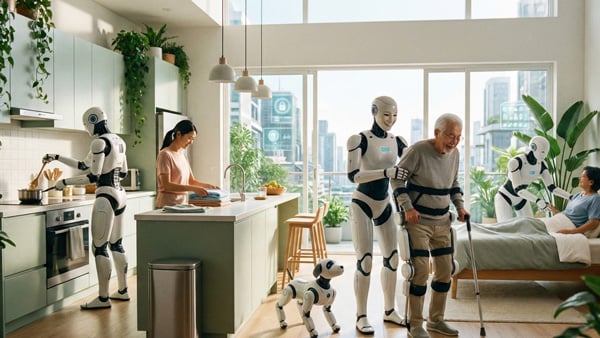
So, what does this mean for you? While it might sound like something out of a factory floor, the biggest impact will likely happen right in your living room.
The End of “Invisible Labor”
The most anticipated application is the automation of household chores. While we have robot vacuums today, Physical AI will power humanoid robots capable of complex, nuanced tasks:
- Laundry: Recognizing clothing shapes and folding them neatly.
- Tidying Up: Picking up scattered toys or hanging up coats.
- Cooking Prep: Scanning the fridge, suggesting recipes, and prepping ingredients.
Startups in Norway and across the globe are racing to bring these “Rosie the Robot” style assistants into our homes, promising a future where we are finally freed from the drudgery of daily housework.
A New Era for Healthcare and Elder Care
Physical AI is also set to become a critical ally in healthcare. These robots will possess both the gentleness to hold a patient and the strength to lift them, aiding in mobility and even surgical support.
In countries facing labor shortages and aging populations, like Japan, these 24/7 robotic assistants are viewed not just as a luxury, but as a societal necessity.
The Robot You Already Know: Autonomous Vehicles
It’s worth noting that self-driving cars and robotaxis are essentially Physical AI on wheels. They recognize road conditions and pedestrians, making split-second decisions to steer and brake. As this technology matures, we can expect the cost of transportation to drop dramatically, potentially becoming cheaper than public transit.
Beyond the Smartphone: The “AI Device”
Is Physical AI only for heavy industry? Not at all. Tech giants like OpenAI and Apple are exploring how to put this power in your pocket.
OpenAI’s “Invisible” Hardware
Rumors are swirling about a collaboration between OpenAI and legendary designer Jony Ive (formerly of Apple) to create a new AI device. This wouldn’t be just another smartphone. It is envisioned as a screen-less, context-aware “AI Agent” that sees and hears what you do, offering support before you even ask for it.
Imagine a device that understands your context—where you are and what you are trying to achieve—and handles bookings or retrieves information proactively. It could be the interface that finally replaces the “app” ecosystem.
Simultaneously, NVIDIA is democratizing this tech with “Project DIGITS,” a supercomputer initiative that allows individual creators and engineers to develop complex AI simulations from home, lowering the barrier to entry for the next generation of inventors.
The Industrial Revolution 2.0: Logistics and Construction
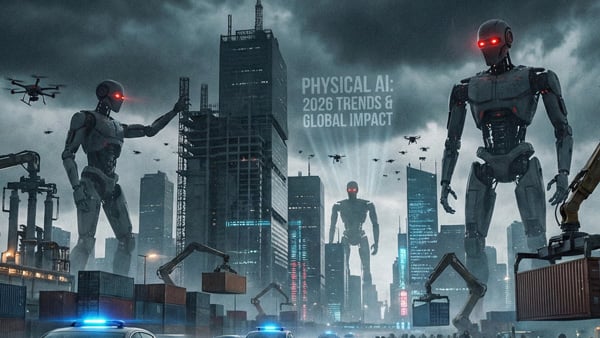
Before robots enter our homes, they will transform our supply chains. In logistics, construction, and manufacturing, Physical AI is already being hailed as a savior for labor shortages.
- Smart Sorting: Unlike old robots that needed uniform inputs, Physical AI can instantly recognize and sort packages of random shapes and sizes.
- Construction: Robots are learning skilled trades, such as drywall installation and painting.
- Safety: These machines can take over dangerous inspections in disaster zones or high-altitude sites, keeping human workers out of harm’s way.

Investment Insight: The “Hidden” Hardware Plays
While US tech giants dominate the software side of AI (the “Brain”), there is a growing sentiment among global investors that Japan dominates the “Body.”
Why Hardware Matters
As AI moves into the physical world, software alone isn’t enough. You need precise motors, joints, and sensors to execute movement. This precision hardware is a field where Japanese engineering is unrivaled. As the market shifts from pure software to embodied AI, these “pick-and-shovel” hardware stocks are gaining attention.
Key Players to Watch
SoftBank Group
CEO Masayoshi Son has declared Physical AI the next frontier, aggressively partnering with and acquiring robotics firms to build a global platform.
> SoftBank Group Corp. Official Website
Yaskawa Electric
A titan in industrial robotics, they are collaborating with SoftBank to build robots that move with autonomous judgment.
> Yaskawa Electric Corporation Official Website
FANUC
A leader in factory automation. They are utilizing NVIDIA’s Omniverse to train robots in virtual space, dramatically speeding up the learning curve.
> FANUC Corporation Official Website
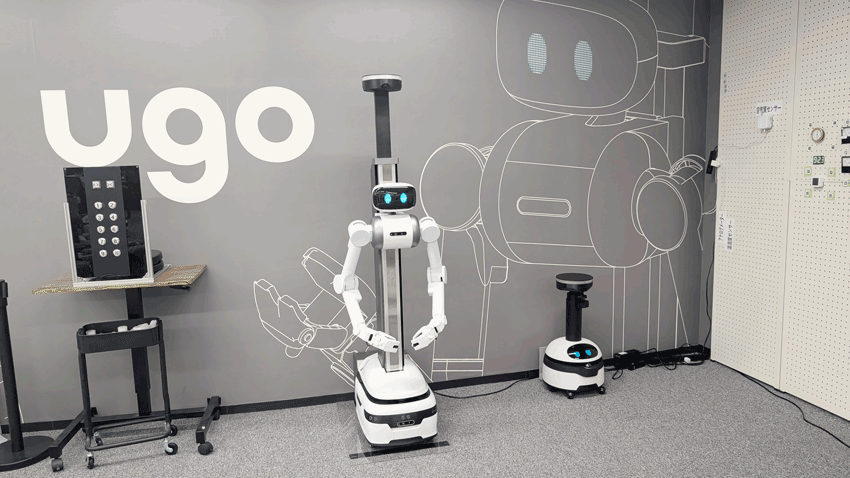
ugo
A startup to watch. They develop avatar robots for building security and inspection that can navigate elevators and read analog meters—practical solutions for the real world.
> ugo Inc. Official Website
The NVIDIA Connection
The key to this ecosystem is NVIDIA. They are building the platforms (like Omniverse) where robots simulate millions of actions virtually before downloading that “brain” into a physical body. The companies that successfully integrate NVIDIA’s simulation tech with high-precision hardware are the ones poised for significant growth.

The Future is Almost Here
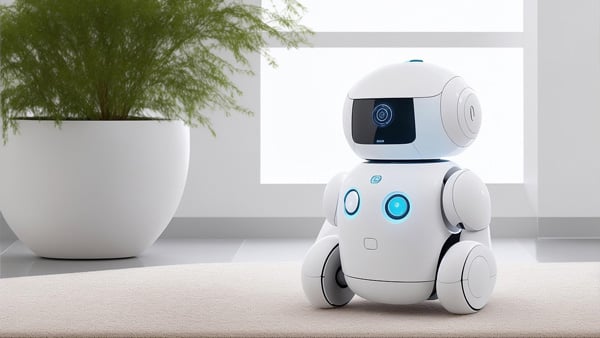
Physical AI is evolving from a “smart assistant on a screen” to a “partner in the real world.”
Whether it’s a humanoid robot folding your laundry, a next-gen device that replaces your phone, or the precision hardware driving the global supply chain, the convergence of AI and robotics is undeniable.
2026 is shaping up to be the breakout year for Physical AI. The sci-fi future of humans and robots coexisting is no longer a movie plot—it’s just around the corner.
Disclaimer: This article is for informational purposes only and does not constitute financial advice. Please verify all information independently.


Gemini 3.8 Flash Pricing: Why a Flat Token Rate Means a 40% Higher Bill
Grok 4.6 Ultimate Guide: Pricing, Benchmarks, and Top Features (August 2026)

Google Drops Gemini 3.6 Flash: High-Speed Agentic AI Beats Claude and GPT in PC Control (July 2026)
OpenAI GPT-5.6 Sol, Terra, and Luna: Complete Pricing, Features, and ChatGPT Work vs. Claude Fable 5 Comparison

Sakana Fugu AI Review: Is This Multi-Agent Orchestrator the Ultimate Claude Fable 5 Alternative?
Is Chat Dead? Inside OpenAI’s ChatGPT Super App Overhaul & IPO Strategy
On the lifestyle web magazine "Minna no Rakuraku Magazine",
we update useful tips and deals every month. Please bookmark us!
- Davos 2026 Recap: Trump’s Return, The AI Power Crunch, and Japan’s Bold Crypto Pivot
- Tokyo Game Show 2026: Historic 5-Day Dates, Ticket Giveaway, and New Teaser