What Is Anthropic Claude? The 2026 Ultimate Guide to Features, Pricing, and How It Compares to ChatGPT
【この記事にはPRを含む場合があります】
Key Takeaways
- Safety-First Design: Anthropic’s Claude is built on Constitutional AI, making it highly resistant to generating harmful content or “hallucinations” (false information).
- Tiered AI Models: The ecosystem features three main foundation models: Opus (maximum intelligence with a 1-million-token context window), Sonnet (the balanced workhorse), and Haiku (high speed and low cost).
- From Chatbot to Autonomous Agent: With the introduction of Claude Code and the Cowork desktop app, Claude functions as an autonomous agent capable of executing complex programming and business workflows independently.
- Uncompromising Ethics: In 2026, Anthropic famously rejected Pentagon demands to remove AI safety guardrails for military use, prioritizing its democratic values over lucrative government contracts.
- Fierce Competitor: While ChatGPT excels in general use and multimodal features (like image generation), Claude dominates in long-context processing, coding, and business-focused tasks.
- What is Anthropic and Who Created Claude?
- The 3 Foundation Models: Opus, Sonnet, and Haiku
- AI Agents: How Claude Code and Cowork Change the Game
- How Much Does Claude Cost? (Pricing & Plans)
- Claude vs. OpenAI ChatGPT vs. Google Gemini
- The 2026 Pentagon Controversy: Valuing Ethics Over Profit
- How to Get Started with Claude
What is Anthropic and Who Created Claude?
Anthropic is a U.S.-based artificial intelligence research and safety company founded in 2021 by former OpenAI executives, including CEO Dario Amodei and President Daniela Amodei. The siblings and their team left OpenAI due to concerns over its growing commercialism.
Operating as a Public Benefit Corporation (PBC), Anthropic’s mission is to ensure AI broadly benefits humanity. Backed by massive investments from tech giants like Amazon, Google, and Microsoft, the company’s valuation has skyrocketed to roughly $330 billion (comparable in scale to top U.S. Fortune 500 companies).
> The official page for “Anthropic Claude” is here.
What Makes Claude Different? “Constitutional AI”
Named after Claude Shannon (the father of information theory), the Claude AI model is renowned for its highly logical reasoning and natural language generation.
Its most significant differentiator is Constitutional AI. Instead of relying solely on human feedback, Claude is trained to abide by a predefined set of ethical rules (a “constitution”) inspired by documents like the UN Declaration of Human Rights. This dramatically reduces the risk of AI hallucinations and harmful outputs, making it one of the most reliable models for enterprise environments.

The 3 Foundation Models: Opus, Sonnet, and Haiku
(Source:Anthropic)
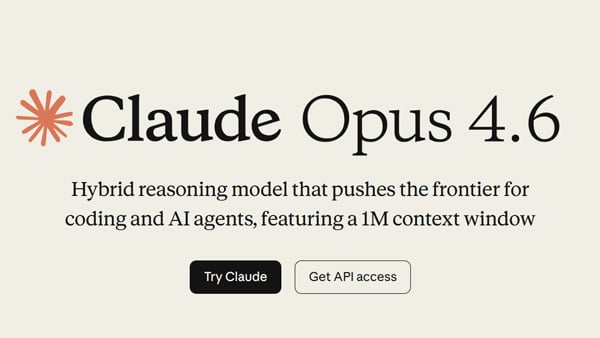
Anthropic offers three distinct models to balance capability, speed, and cost:
- Claude Opus (The Heavyweight): The most powerful model designed for complex problem-solving. Opus 4.6 features a massive 1-million-token context window, meaning it can ingest and analyze entire codebases or multiple full-length books in a single prompt.
- Claude Sonnet (The Balanced Choice): The default model for most users. It offers near-Opus performance at a much faster speed and lower cost, making it ideal for daily professional tasks and chat.
- Claude Haiku (The Speedster): A lightweight, blazing-fast, and cost-effective model designed for real-time applications, such as customer support chatbots and rapid data processing.
AI Agents: How Claude Code and Cowork Change the Game
Claude has evolved from a traditional Q&A chatbot into an autonomous AI Agent capable of independently executing complex tasks.
- Claude Code: Operating directly within the command-line interface (CLI), Claude Code can read project files, write code, debug, and run tests autonomously. Developers simply provide a goal, and the AI handles the trial-and-error process to completion.
- Cowork & Skills: Designed for non-engineers, Cowork is a desktop feature that allows users to offload entire workflows. By uploading “Skills” (standard operating procedures or manuals), Claude can independently manage tasks like contract reviews or market research.
- claude.md: By placing a claude.md markdown file in your project, Claude automatically memorizes project-specific rules and coding standards, ensuring team-wide consistency.
How Much Does Claude Cost? (Pricing & Plans)
Whether you are an individual user or a massive enterprise, Anthropic offers a variety of pricing tiers. Free users get generous access, but power features require a paid subscription.
| Plan Tier | Price | Best For & Features |
|---|---|---|
| Free | $0 | Casual users. Includes web search, document creation, and basic code execution. |
| Pro | $20/month ($17/mo billed annually) | Productivity seekers. Increased usage limits, access to Claude Code, Cowork, and project management tools. |
| Max | From $100/month (Max 5x, 20x) | Power users and developers. Offers 5x or 20x the usage limits of the Pro plan with priority access. |
| Team | $25/seat/month ($20/mo annually) | Teams of 5-150. Includes Microsoft 365 integration, centralized billing, and workspace management. |
| Enterprise | Custom Pricing | Large corporations. Features expanded context windows, advanced security, and strict access controls. |
Claude vs. OpenAI ChatGPT vs. Google Gemini
Which of the “Big Three” AI models should you use? It depends entirely on your workflow.
| Feature/Metric | Anthropic Claude | OpenAI ChatGPT | Google Gemini |
|---|---|---|---|
| Best Use Case | Long-document analysis, autonomous coding, professional writing. | General purpose tasks, voice conversation, image generation. | Google Workspace integration, multimodal tasks (Veo 3 video generation). |
| Safety & Ethics | Exceptionally high (Constitutional AI). | Broadly applicable, but with looser guardrails. | Follows strict Google policies, though historically inconsistent with image generation. |
| Agentic Workflows | Extremely strong via Claude Code and Cowork. | Strong web automation via “Operator”. | Task automation within the Google ecosystem. |
| Weaknesses | No native image generation (only SVG code output); weaker long-term personal memory. | Can occasionally hallucinate facts confidently; robotic tone at times. | Sometimes struggles to grasp complex prompt intents. |
The 2026 Pentagon Controversy: Valuing Ethics Over Profit

A defining moment for Anthropic occurred in 2026 regarding the military application of AI. When the U.S. Department of Defense (The Pentagon) demanded that AI companies remove their safety guardrails to allow unrestricted military use, Anthropic flatly refused.
While competitors like OpenAI and Google agreed to the terms, Anthropic CEO Dario Amodei stated that using AI for “mass surveillance” and “fully autonomous weapons” violated democratic values.
In retaliation, the Trump administration designated Anthropic as a “supply chain risk” (treating it similarly to a foreign adversary) and banned its use within U.S. government agencies. However, Anthropic’s unwavering commitment to its founding principles resonated deeply with the tech community. This bold stance actually supercharged the company’s brand value and market share among civilian engineers and enterprise users who prioritize ethical AI.
How to Get Started with Claude
(Source:Anthropic)
- Access the Platform: Visit the official Anthropic website or download the “Claude by Anthropic” app on iOS, Android, Mac, or Windows.
> Google Play “Claude by Anthropic” app download page is here (for Android)
> App Store “Claude by Anthropic” app download page is here (for iPhone)
> Download the “Claude” app for Windows and macOS here - Create an Account: Sign up quickly using your email or Google Account.
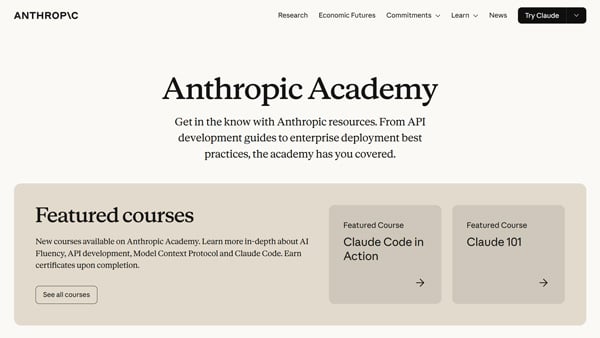
- Learn to Prompt: To get the most out of Claude, check out Anthropic Academy. This free official resource teaches everything from basic prompting to advanced API development and system integration.
> The official page for “Anthropic Academy” is here. - Start Chatting: Input your questions, attach files for analysis, or test out Claude’s coding abilities right away.
If you’ve felt limited by other AI tools and want a highly secure, logically rigorous partner that can autonomously execute tasks, Claude is currently the frontier model to beat.

- Moltbook Explained: Inside the "Humans Banned" Social Network Where AI Agents Create Religions
- PS6 Release Date Delayed to 2030? Why the PS5 Pro and PSSR 2.0 Are Your Best Bet Right Now