


Nvidia NTC Explained: How AI Cuts VRAM Usage by 85% and Saves 8GB GPUs
[This article may contain PR]

Key Takeaways
- Massive VRAM Savings: Nvidia NTC utilizes an AI neural network to reduce game texture memory consumption by up to 85% without sacrificing visual fidelity.
- A Lifeline for 8GB GPUs: By eliminating severe VRAM bottlenecks, NTC enables mid-range 8GB graphics cards to comfortably run modern AAA titles at maximum graphical settings.
- Storage Efficiency: Beyond VRAM, NTC drastically reduces overall game install sizes and download times, freeing up valuable SSD space.
- NTC vs. DLSS: While DLSS uses AI to boost frame rates through upscaling, NTC specifically compresses texture data to free up memory. They are designed to work perfectly together.
- Industry-Wide Adoption: With Microsoft DirectX 12 integration and competitors like Intel developing TSNC, AI-driven texture compression is rapidly becoming the new gaming standard.
- What is Nvidia NTC (Neural Texture Compression)?
- 3 Major Benefits of NTC for PC Gamers
- 1. Cuts VRAM Usage by Up to 85%
- 2. Up to 4x Higher Resolution at the Same VRAM Cost
- 3. Smaller Install Sizes and Faster Downloads
- Will NTC Save 8GB Graphics Cards?
- NTC vs. DLSS: Understanding the Difference
- The Competition: Nvidia NTC vs. Intel TSNC
- The Future of PC Gaming
What is Nvidia NTC (Neural Texture Compression)?
(Source: Nvidia)
If you are a PC gamer, you have likely experienced the frustration of VRAM limitations causing stuttering, or massive 100GB+ game files eating up your storage.
Nvidia NTC (Neural Texture Compression) is a groundbreaking new technology that uses artificial intelligence (neural networks) to compress and decompress in-game textures, drastically reducing VRAM and storage consumption.
Traditionally, games use a method called Block Compression (BCn), which has strict limits on how much a file can be compressed before the image quality degrades. NTC fundamentally changes this process. Instead of storing the massive image files natively, the AI learns the “latent representation” (the core characteristics of color and texture) and instantaneously reconstructs the high-quality textures directly on the GPU while you play.
Key Features of Nvidia NTC Processing
- 100% Deterministic: Unlike generative AI that can hallucinate random patterns, NTC is entirely deterministic. It perfectly restores the exact original texture every single time.
- Powered by Tensor Cores: The decompression process runs explicitly on Nvidia’s AI-focused Tensor Cores. This means it doesn’t steal resources from the CUDA cores rendering your game, ensuring zero drop in frame rates.

3 Major Benefits of NTC for PC Gamers
When fully integrated into modern games, Nvidia NTC provides three massive benefits to the end user:
1. Cuts VRAM Usage by Up to 85%
In an official Nvidia demonstration featuring a detailed Tuscan villa scene, textures that traditionally consumed 6.5GB of VRAM were reduced to a mere 970MB using NTC. This achieved an astounding 85% memory savings with absolutely no loss in visual quality.
2. Up to 4x Higher Resolution at the Same VRAM Cost
NTC doesn’t just save space; it enhances potential quality. If developers restrict VRAM usage to the same 970MB, NTC can deliver significantly sharper details, boasting the potential for up to 4x higher resolution textures compared to traditional compression methods.
3. Smaller Install Sizes and Faster Downloads
Because the raw texture data is drastically smaller, the overall install size of AAA games will shrink significantly. Gamers will spend less time downloading massive update patches and can conserve valuable SSD storage space.
Will NTC Save 8GB Graphics Cards?
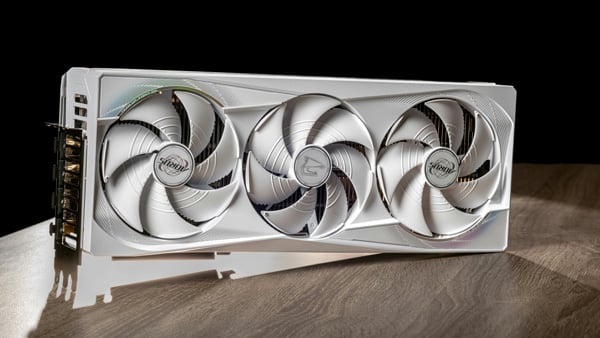
Yes. NTC is poised to completely eliminate the VRAM bottleneck, allowing 8GB graphics cards to remain highly relevant for modern AAA gaming.
Recently, modern games easily consume 6GB to 8GB of VRAM just on textures, forcing users with mid-range GPUs to drop their settings to “Medium” or “Low”. Because NTC can squeeze 6.5GB of data into less than 1GB, an 8GB VRAM pool suddenly becomes incredibly spacious. This software-driven AI breakthrough means gamers will not need to buy ultra-expensive, high-VRAM enthusiast graphics cards to enjoy top-tier gaming experiences for years to come.
Furthermore, this is not a locked ecosystem. Microsoft is adding support for these technologies via DirectX 12 (Shader Model 6.9 Cooperative Vectors), and Nvidia’s SDK is designed to work on AMD and Intel GPUs as well.

NTC vs. DLSS: Understanding the Difference
Are NTC and DLSS the same thing? No. DLSS scales screen resolution using AI to increase frame rates (fps), while NTC compresses 3D texture data using AI to save VRAM.
They serve entirely different purposes but are highly complementary.
| Feature | DLSS (Deep Learning Super Sampling) | NTC (Neural Texture Compression) |
|---|---|---|
| Primary Goal | Boosts frame rates (fps) & optimizes visual output | Reduces VRAM usage & saves SSD storage space |
| Processing Stage | Final stage of rendering (before screen output) | Mid-rendering stage (during texture loading) |
| AI Approach | Generates high-res frames from low-res inputs | Accurately restores compressed 3D texture data |
| User Benefit | Smooth, stutter-free gameplay | Prevents game crashes and low-res textures due to VRAM limits |
By running both technologies simultaneously, gamers can achieve the ultimate experience: high frame rates, ultra-high resolutions, and incredibly low VRAM consumption.

The Competition: Nvidia NTC vs. Intel TSNC

Nvidia is not alone in this race. Intel is developing its own AI texture compression called Intel TSNC (Texture Set Neural Compression), which boasts up to an incredible 18x compression rate.
Intel’s TSNC offers developers two distinct variants:
- Variant A (Quality-Focused): Achieves up to 9x compression with only a roughly 5% loss in visual quality, nearly indistinguishable to the human eye.
- Variant B (Compression-Focused): Sacrifices slight visual quality to achieve extreme 18x compression. This is highly beneficial for mobile devices and game consoles where VRAM and storage are severely limited.
Comparison Table
| Feature</th | Nvidia NTC | Intel TSNC |
|---|---|---|
| Compression Rate | Up to 85% VRAM reduction (~6.7x) | Up to 18x compression (Variant B) |
| Hardware Optimization | Optimized for Nvidia Tensor Cores | Supported by Intel XMX cores (Cooperative Vectors) |
| Compatibility | Supports AMD and Intel GPUs | Can run on CPUs and third-party GPUs (via FMA) |
| Availability | SDK already public, Unreal Engine support planned | Alpha/Beta SDK planned for release in 2026 |
Both technologies are the industry’s definitive answers to the growing problem of game bloat and memory limitations.

The Future of PC Gaming
The era of fearing VRAM limits is coming to an end. With NTC’s SDK already available to developers and rumors pointing toward similar AI compression technologies being adopted in next-generation consoles like the PlayStation 6, this is quickly becoming the industry standard.
If you are planning to build a new PC or upgrade your graphics card, remember that AI efficiency—not just brute-force hardware—is the future. You may no longer need to overspend on massive VRAM capacities to achieve the highest fidelity gaming.

The Complete Guide to NVIDIA RTX Spark: Specs, Pricing, and the Reality of Arm Compatibility

Inside TGS 2026: Ice Sculptures, Soundproof Booths, and a Bigger Yet Quietly Restrained Show

Idols of Ash Guide: How to Survive the 97% Rated Steam Horror Sensation
Palworld Online Mobile MMO: Garena Partnership, 2026 Release, and Key Differences Explained

Nintendo’s Palworld Patents Rejected in the US and Japan: 2026 Lawsuit Updates

Palworld 1.0 Release Guide: Exact Launch Time, 40+ New Pals, and Essential Save Data Tips
On the lifestyle web magazine "Minna no Rakuraku Magazine",
we update useful tips and deals every month. Please bookmark us!
- The Ultimate Guide to Instagram Plus: New Features, Pricing, and Stealth Story Views Explained
- CPU-Z & HWMonitor Hacked via Supply Chain Attack (April 2026) – How to Check Your PC