


Nintendo’s Palworld Patents Rejected in the US and Japan: 2026 Lawsuit Updates
[This article may contain PR]
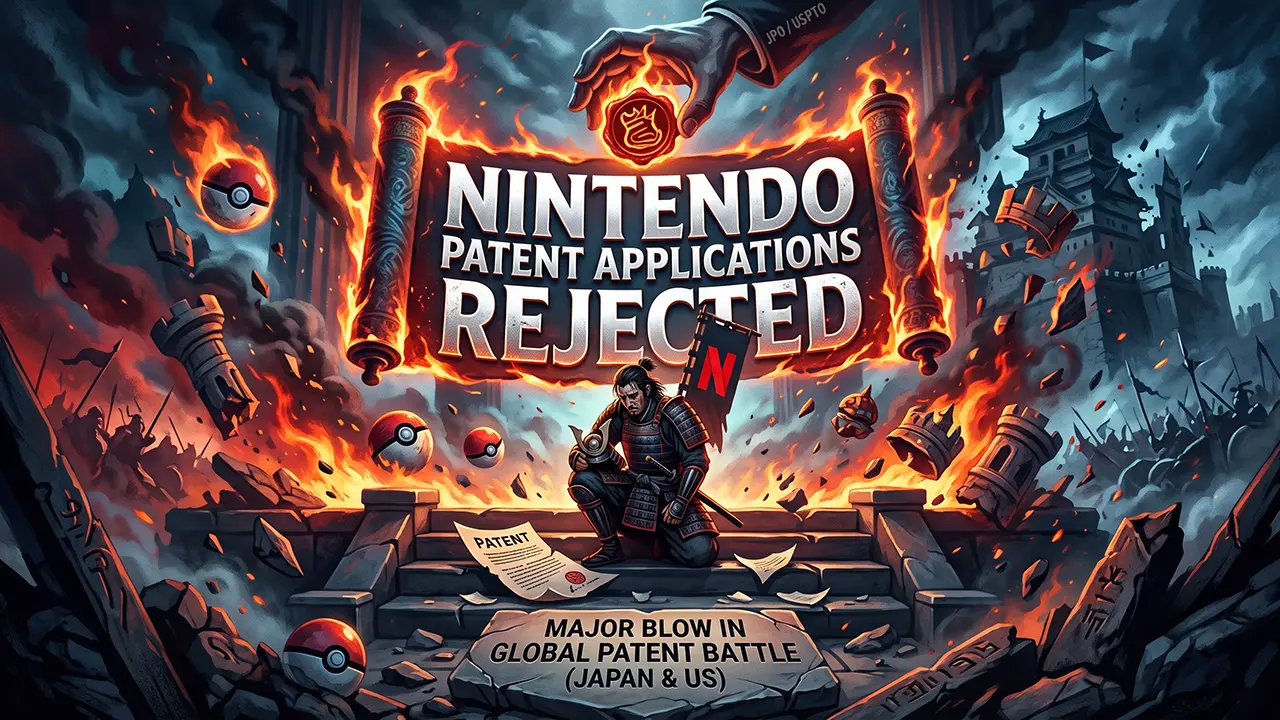

In 2026, patents filed by Nintendo targeting monster-capturing and character-summoning mechanics—widely believed to be aimed at Pocketpair’s hit game Palworld—have faced back-to-back rejections by the United States Patent and Trademark Office (USPTO) and the Japan Patent Office (JPO). This article breaks down exactly what is happening with these patent examinations, why the rejections were issued based on prior art, and what this means for the future of the video game industry.
Key Takeaways
- The USPTO issued a non-final rejection of all 26 claims for Nintendo’s character-summoning patent (US Patent No. 12,433,397), heavily citing Nintendo’s own 2019 patents as prior art.
- The JPO rejected Nintendo’s touchscreen monster-capturing patent (Application No. 2026-019762), remarkably using a 2013 YouTube video of a fan-made Pokémon game as invalidating prior art.
- Both patent offices ruled that Nintendo’s claims lacked an “inventive step” (non-obviousness), concluding that the mechanics were merely obvious combinations of existing video game systems.
- Pocketpair has already updated Palworld to alter its summoning mechanics, successfully mitigating infringement risks for the game’s current versions in the ongoing Tokyo District Court lawsuit.

2026 USPTO Update: Nintendo’s US Patent Faces Non-Final Rejection

The USPTO has dealt a significant blow to Nintendo’s legal strategy by issuing a Non-Final Office Action rejecting all 26 claims of US Patent No. 12,433,397. This patent covers a highly specific system where a player summons a sub-character to fight in either an automatic or manual battle mode.
In a highly unusual move, USPTO Director John A. Squires initiated an ex parte reexamination of the patent in November 2025. By March 2026, the examiner concluded that the patent lacked an inventive step. Notably, the examiner cited prior art not only from competitors like Konami and Bandai Namco but also from Nintendo’s own 2019 patent applications (such as the Tora and Motokura patents).
To fully understand the legal implications of patenting game mechanics and why the USPTO pushed back against Nintendo’s claims, watch this breakdown by copyright attorney Leonard French.
Key takeaways from the video: Patenting game rules is highly controversial and heavily scrutinized. The USPTO Director’s initiation of an ex parte reexamination was extremely rare, signaling administrative concerns over patents being used as anti-competitive weapons. The examiner found Nintendo’s mechanics obvious based on the “KSR standard,” proving that game development is an iterative process relying on decades of prior art.
Japan Patent Office (JPO) Rejects Patent Based on Fan-Made Game
Similarly, the JPO issued a final rejection (Decision of Rejection) for Nintendo’s patent application covering a touchscreen-based monster-capturing system (Application No. 2026-019762).
Shockingly, the primary prior art used to justify this rejection was an unofficial fan-made gameplay video uploaded to YouTube in June 2013. The JPO examiner cited footage of Pokémon Generations, a 3D indie action RPG fan game, ruling that Nintendo’s proposed invention could have been easily derived from the mechanics publicly shown in that video.
Nintendo strongly objected, arguing that it is highly inappropriate to treat a copyright-infringing fan game as legitimate prior art. However, the JPO examiner dismissed this argument, stating that under patent law, whether a cited work infringes on copyright is entirely irrelevant to determining its inventive step.
For a closer look at how a 2013 fan game became the central piece of prior art in the JPO’s decision, this video explores the intersection of copyright infringement and patent validity.
Key takeaways from the video: The JPO examiner cited the unofficial 2013 fan game as prior art because it clearly demonstrated real-time movement and creature-catching mechanics eight years before Nintendo’s priority date. While Nintendo argued the fan project was illegal, the examiner determined that the legal status of the prior art does not invalidate the fact that the technology was already publicly available.

USPTO vs. JPO: A Comparison of the Rulings
| Feature | USPTO (United States) | JPO (Japan) |
|---|---|---|
| Targeted Technology | Summoning sub-characters and switching battle modes | Touchscreen-based monster capturing and manipulation |
| Current Status | Non-Final Office Action (All 26 claims rejected) | Final Rejection (Appeal possible) |
| Cited Prior Art | Nintendo’s own older patents, Konami, Bandai Namco | 2013 YouTube gameplay video of a fan-made game (Pokémon Generations) |
| Primary Ruling | Lacks inventive step (obvious combination of existing tech) | Lacks inventive step (easily derived from existing public videos) |
Why Did Both Patent Offices Reject Nintendo’s Claims?
The primary reason for the rejections in both the US and Japan is the lack of an “inventive step” (non-obviousness). To secure a patent, an invention must not only be new but also non-obvious to an expert in the field. Both agencies highlighted the following issues:
- Cumulative Nature of Game Design: Game mechanics are inherently iterative. Systems like “throwing an item to catch a monster” have been implemented and refined in countless ways over decades.
- Risks of Overly Broad Patent Claims: In an attempt to cast a wide net against competitors like Palworld, Nintendo filed divisional applications with very broad claims. This strategy backfired, as broader claims easily conflict with existing public knowledge (prior art).
- Separation of Copyright and Patent Law: The JPO reaffirmed that intellectual property is treated separately; an alleged copyright infringement does not disqualify a publicly available work from being used as patent prior art.
In the author’s view, judicial and administrative bodies are becoming highly cautious about allowing a single entity to monopolize foundational gameplay actions, creating a healthy safeguard for creative freedom in the industry.
Frequently Asked Questions (FAQ)
Q1: Does this mean Nintendo has officially lost the Palworld lawsuit?
A1: Not immediately. While the rejected Japanese patent is a divisional application of the ones currently being litigated in the Tokyo District Court, this strong ruling against its “inventive step” severely weakens Nintendo’s overall legal leverage. Furthermore, the US rejections mean Nintendo loses a powerful weapon if they intend to sue in the United States.
Q2: How has Pocketpair (the developer of Palworld) responded?
A2: Pocketpair has already released proactive updates altering specific game mechanics to avoid infringement. For example, they changed the throwing mechanic for summoning captured monsters into a simple button-press action. Because of these workarounds, Nintendo’s lawsuit is reportedly forced to target only older, outdated versions of Palworld.
Q3: Can a copyright-infringing fan game legally be used as prior art to reject a patent?
A3: Yes. According to the Japan Patent Office, whether a piece of media infringes on copyright is completely irrelevant to patent law. As long as the technology or mechanic was publicly demonstrated and available to the world, it qualifies as valid prior art.
Q4: What should indie game developers take away from this?
A4: Developers should avoid copying exact 1:1 UI layouts or highly specific mechanical combinations. However, these rulings confirm that foundational, generic gameplay mechanics—such as catching and summoning monsters—cannot be easily monopolized by a single large corporation.
Inside TGS 2026: Ice Sculptures, Soundproof Booths, and a Bigger Yet Quietly Restrained Show

Idols of Ash Guide: How to Survive the 97% Rated Steam Horror Sensation
Palworld Online Mobile MMO: Garena Partnership, 2026 Release, and Key Differences Explained
Palworld 1.0 Release Guide: Exact Launch Time, 40+ New Pals, and Essential Save Data Tips
Tokyo Game Show (TGS) 2026 Complete Guide: Tickets, Dates, and the $22,000 Gold Pass
Meccha Chameleon Guide: How to Play, Price, and Beginner Tips for the Viral Steam Hit
On the lifestyle web magazine "Minna no Rakuraku Magazine",
we update useful tips and deals every month. Please bookmark us!
- Google Drops Gemini 3.6 Flash: High-Speed Agentic AI Beats Claude and GPT in PC Control (July 2026)
- Palworld Online Mobile MMO: Garena Partnership, 2026 Release, and Key Differences Explained