


Tokyo to Launch World’s First “Sushi Bus” in October 2026: Route, Price, and High-Tech Safety Explained
[This article may contain PR]
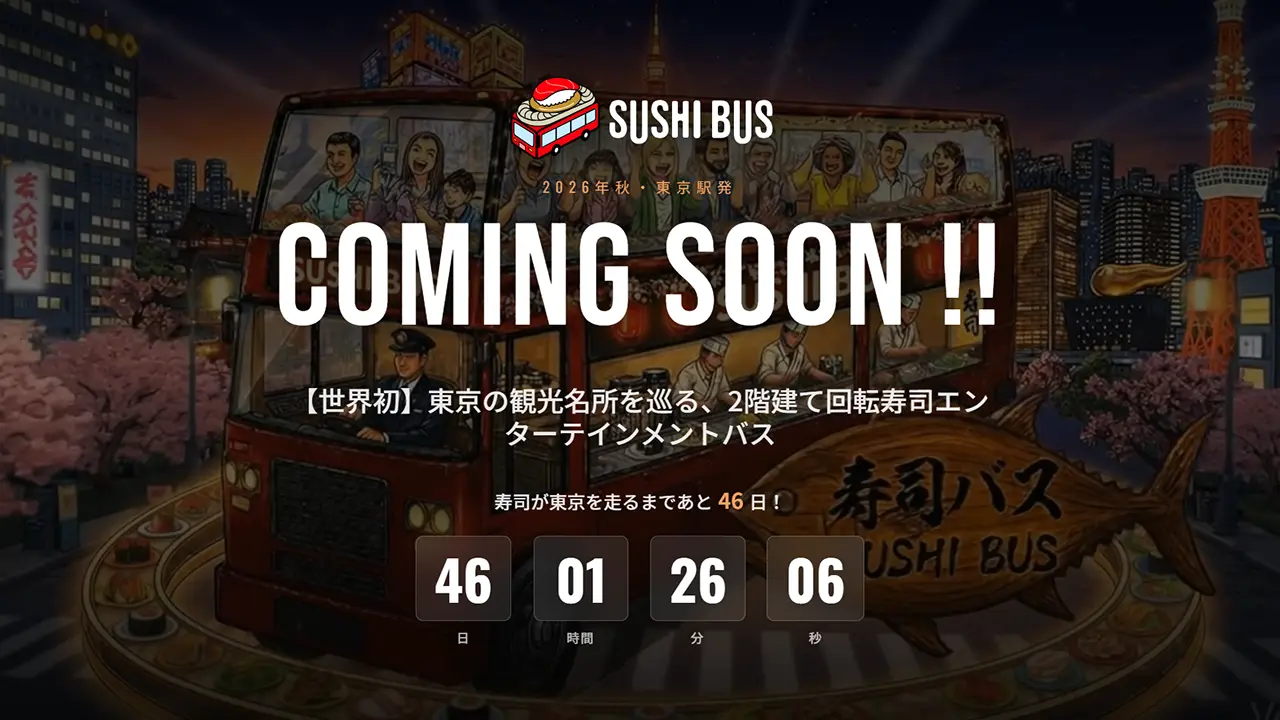

For travelers visiting Japan, experiencing the country’s world-class culinary scene and exploring its historic cityscapes are often the top two items on the bucket list. In an unprecedented move, a ground-breaking new project is set to merge these experiences into one ultimate adventure.
Starting October 10, 2026, Tokyo will welcome the world’s very first double-decker “running conveyor belt sushi restaurant,” officially named the “SUSHI BUS”.
As news of this innovative project spreads, potential passengers and food lovers around the globe are asking practical questions: How does a conveyor belt operate smoothly on a moving bus without plates flying off? Is the raw fish safe and fresh under the open sun? How much does it cost, and how do you book a seat?
This article provides a comprehensive dive into Tokyo’s highly anticipated “SUSHI BUS”—from the advanced Japanese engineering that keeps your sushi stable to the booking systems, routes, and international reactions.
Key Takeaways
- Official Launch Date: The SUSHI BUS will officially begin operations in Tokyo on October 10, 2026.
- The Concept: A double-decker, open-air sightseeing bus where passengers enjoy all-you-can-eat conveyor belt sushi during a 70-minute circular tour.
- Pricing & Capacity: Tickets are expected to cost 16,000 Yen (approx. $101 USD) per person. The bus has an extremely exclusive capacity of only 20 seats per ride.
- High-Tech Safety: Powered by custom conveyor technology from Japan’s leading manufacturer, Kita Nihon Kakoh, the plates are engineered to remain perfectly stable even during sudden stops or sharp turns.
- Hygiene Standards: Sushi is prepared in a climate-controlled kitchen on the first floor and delivered to the second floor via a built-in elevator immediately before serving, protecting the fish from sunlight and heat.

- What is the "Sushi Bus"? Combining Open-Air Sightseeing with Revolving Dining
- The Tech Behind the Gimmick: How the "Sushi Bus" Survives Sudden Braking and Hot Sun
- 1. The Two-Tier Smart Kitchen System
- 2. Anti-Slip Conveyor Belt Technology
- 3. Solving the Sun and Heat Dilemma
- Comparison: SUSHI BUS vs. Alternative Dining Experiences
- Routes, Pricing, and Booking: Everything You Need to Know
- The "Joy of Being Watched": A Built-in Viral Marketing Machine
- The Brain Behind the Bus: Who Invented the SUSHI BUS?
- Global Reactions: Reddit and Social Media Buzz
- FAQ (Frequently Asked Questions)
- Q1: How much does a ticket on the SUSHI BUS cost, and what is included?
- Q2: What is the exact route, and where do passengers board?
- Q3: How is the sushi kept fresh and safe on an open-air bus under the sun?
- Q4: What happens if the bus makes a sudden stop? Will the sushi fall off?
- Q5: How can I book a seat, and can Japanese locals join?
- Conclusion: Driving the Future of Culinary Tourism
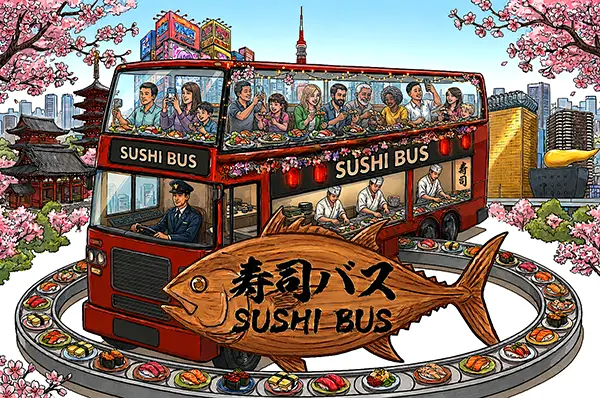
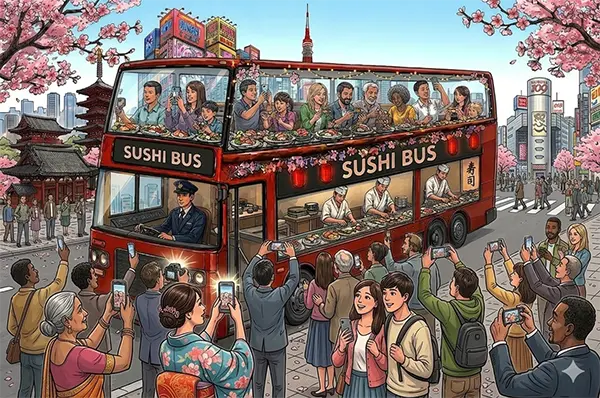
What is the “Sushi Bus”? Combining Open-Air Sightseeing with Revolving Dining
(Source: PR TIMES)
The SUSHI BUS is a brand-new, entertainment-focused food activity designed to revolutionize inbound tourism in Japan. This project is a cross-industry collaboration between the newly established startup SUSHI BUS Co., Ltd. and WILLER ACROSS Co., Ltd., a pioneer in operating luxury restaurant buses in Japan.
Modern travelers no longer want to just eat sushi at a static counter or peer at Tokyo’s sights through a bus window; they crave unique, shareable experiences. The SUSHI BUS delivers exactly that by placing a fully functioning conveyor belt down the center of an open-air double-decker bus.
To get a sense of how this unique experience looks during the day, watch this official daytime concept video showing how the bus seamlessly blends Tokyo’s beautiful urban backdrops with fresh, circulating sushi.
What You See in the Video:
- The Open-Air Upper Deck: Passengers sit under the open sky, feeling the breeze as they take in panoramic views of Tokyo’s skyline and landmarks like Tokyo Tower.
- The Running Conveyor Belt: A sleek, high-tech sushi lane runs through the center of the upper deck, smoothly moving colorful plates of sushi right past the diners’ seats.
- Dynamic Backdrops: Diners grab fresh sushi with Tokyo’s historic streets and towering skyscrapers serving as a moving, cinematic backdrop.

The Tech Behind the Gimmick: How the “Sushi Bus” Survives Sudden Braking and Hot Sun
Putting a moving conveyor belt on a double-decker bus sounds like a recipe for disaster. Skeptics immediately wonder: What happens if the driver slams on the brakes? Will raw fish and plates go flying? To solve this, the creators spent two and a half years developing and testing highly sophisticated Japanese engineering solutions.
1. The Two-Tier Smart Kitchen System
The SUSHI BUS operates on a highly efficient, hygienic two-level system:
- 1st Floor (The Kitchen): The entire lower deck of the double-decker bus is converted into a professional kitchen equipped with powerful refrigeration and hygiene systems. Here, professional chefs prepare fresh sushi on the spot.
- Connecting Elevator: Freshly prepared plates are placed in a custom-built, automatic mini-elevator (dumbwaiter) that transports the sushi to the upper deck in seconds.
- 2nd Floor (The Dining Area): An onboard cast member receives the plates from the elevator and places them onto the conveyor belt, which immediately delivers them to the passengers.
2. Anti-Slip Conveyor Belt Technology
The project’s biggest breakthrough is a specialized conveyor belt and plate-stabilization system developed in partnership with Kita Nihon Kakoh Co., Ltd., which holds the overwhelming number-one market share in Japan’s conveyor-belt sushi industry. Through hundreds of test runs, they engineered a custom track where plates remain firmly anchored to the lane. Even during sudden stops or uneven road surfaces, the plates do not slip, slide, or tip over.
Additionally, the WILLER Group (which owns all five of Japan’s active kitchen-equipped restaurant buses) fully renovated their vehicle for this project and established a strict, specialized driving manual for their highly skilled drivers to systematically avoid sudden acceleration and hard braking.
3. Solving the Sun and Heat Dilemma
A common concern among international tourists is the safety of eating raw fish on an open-top bus under the direct sun. To guarantee absolute freshness and safety, the SUSHI BUS implements a strict “immediate preparation, immediate serving” policy.
The fish is kept and sliced in the heavily air-conditioned kitchen on the first floor under strict temperature controls. All raw ingredients are prepped beforehand in a fully certified ground-based hygiene facility. Only pre-sliced, temperature-managed fish is brought onto the bus kitchen, ensuring that the food is never exposed to heat or sun until the moment it rises to the second-floor conveyor belt to be eaten immediately.
For a direct look at the incredible safety and logistics, watch this international news broadcast demonstrating the onboard elevator and a live, high-speed sudden-braking test.
Key Takeaways from the News Report:
- The Elevator in Action: The video clearly shows the kitchen staff loading freshly made sushi onto the mini-elevator and sending it to the upper deck with a single button press.
- The Sudden Braking Test: The news crew records a live safety test where the bus slams on its brakes. Despite the sudden stop, the sushi plates remain completely stationary on the conveyor belt without a single piece of fish falling off.
- Addressing Safety Concerns: The broadcast highlights the international debate regarding sun exposure and raw fish, detailing the bus’s dual-cabin strategy—cooking in the shaded, cool first-floor kitchen and serving immediately.
Comparison: SUSHI BUS vs. Alternative Dining Experiences
To understand how the SUSHI BUS redefines dining, here is a breakdown of how it compares to standard restaurant tours and traditional land-based conveyor belt sushi restaurants:
| Feature | The SUSHI BUS | Standard Restaurant Buses | Traditional Conveyor Belt Restaurants |
|---|---|---|---|
| Mobility & Route | Circular loop around Tokyo landmarks (no final destination) | Linear travel to specific tourist destinations | Stationary brick-and-mortar shops |
| Menu Style | Authentic sushi (All-You-Can-Eat) | Multi-course French or Japanese fine dining | Single-plate ordering with various sides |
| Seating Capacity | Only 20 seats (highly exclusive, single vehicle) | Approx. 25–30 seats per bus | 80–150+ seats per location |
| Safety Engineering | Custom anti-slip, anti-brake track system | Standard dining tables with fixed tableware | Standard flat conveyor belts |
| Kitchen System | 1st floor kitchen with elevator delivery to 2nd floor | Onboard finishing of pre-prepped food | Immediate kitchen-to-belt connection |
| Primary Appeal | Dynamic “seeing and being seen” dining entertainment | Elegant, relaxing meal with changing scenery | Quick, casual, and highly budget-friendly |

Routes, Pricing, and Booking: Everything You Need to Know
Planning a trip to Japan this fall? Here are the essential, practical details for booking a seat on the SUSHI BUS:
How Much Does It Cost?
Tickets are expected to be priced at 16,000 Yen (approx. $101 USD) per person. While this is higher than a typical meal at a standard conveyor-belt sushi chain (which usually runs around 2,000 to 3,000 Yen / approx. $13 to $19 USD), it represents incredible value when packaged as a premium experience. A standard Tokyo double-decker open-air bus tour costs about 5,000 to 8,000 Yen (approx. $32 to $51 USD) on its own. Combining an all-you-can-eat high-quality sushi feast with a premium tour and a world-first technological experience makes $101 USD a highly competitive deal, especially for international tourists taking advantage of favorable exchange rates.
Where Does It Depart, and What is the Route?
The SUSHI BUS departs from the Kajibashi Parking Lot near Tokyo Station. The 70-minute tour is completely circular, meaning it has no final destination and will return you to Tokyo Station. The route is carefully curated to pass through Tokyo’s most famous tourist hubs, including:
- Shibuya Scramble Crossing
- Ginza (Ginza-dori Avenue)
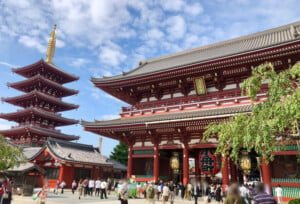
- Asakusa (in front of Kaminarimon Gate)
How and When Can You Book?
The official launch is scheduled for October 10, 2026. Due to the extremely limited capacity of only 20 seats per ride (translating to a maximum of 100 passengers per day across 5 daily runs), reservations are expected to become “platinum tickets” that sell out instantly. Online pre-reservations are expected to open on the official website starting in September 2026. Both international tourists and Japanese locals are welcome to book.
The “Joy of Being Watched”: A Built-in Viral Marketing Machine
Beyond the sushi and the scenery, there is a powerful psychological benefit to riding the SUSHI BUS: the thrill of being the center of attention.
Imagine cruising through the massive crowds at Shibuya Scramble Crossing or Asakusa’s Kaminarimon Gate on a bright, double-decker open-top bus where sushi is spinning right in front of you. Thousands of pedestrians will stop in their tracks, pull out their smartphones, and point their cameras at the bus in utter disbelief.
As a passenger, you aren’t just a tourist; you become the star of Tokyo’s streets. This “joy of being watched” elevates the SUSHI BUS from a simple meal into an unforgettable, viral-ready stage, offering a sense of luxury and exclusivity that money rarely buys.
The Brain Behind the Bus: Who Invented the SUSHI BUS?
This incredibly creative, highly calculated concept is the brainchild of Tomoyuki Yano, the CEO of SUSHI BUS Co., Ltd.. Yano is not your typical corporate executive; he is a lifelong adventurer who has spent roughly 2,000 days traveling through over 120 countries.
Through his global travels, Yano developed a deep, firsthand understanding of what international tourists look for: unforgettable, authentic, and surprising memories. Upon returning to Japan, he became a highly successful creator of inbound tourism attractions.
Some of his previous hits include:
- The Piranha Fishing Event: A wildly eccentric, viral fishing experience that shocked and delighted crowds.
- The Ninja Tour & Ninja Cafe: Launched in 2016, this immersive entertainment experience allows tourists to undergo authentic ninja training. It became a massive hit, expanding across Tokyo, Kansai, and Tokai, and cementing itself as one of Japan’s premier inbound attractions.
The SUSHI BUS represents the culmination of Yano’s years of travel expertise and inbound hospitality. By condensing Japan’s world-famous cuisine, cutting-edge technology, and spirit of hospitality (omotenashi) into a single vehicle, Yano has designed an experience that is already capturing global attention before its wheels even touch the asphalt.
Global Reactions: Reddit and Social Media Buzz
(Source: PR TIMES)
The global internet community has already caught wind of the SUSHI BUS, sparking a wave of humor, excitement, and a few practical debates.
On Reddit’s popular r/gadgets community, users have flooded the comments with hilarious movie references and puns:
- “Snakes on a Plane 2: Fish on a Bus,” joked one user.
- Another quickly chimed in with, “Eels on wheels”.
- “The only surprising thing about this is that it didn’t already exist,” remarked another popular comment.
While some practical-minded users raised concerns about motion sickness (“My motion sickness would make that trip interesting, to say the least”) or questioned the pricing, the general consensus remains overwhelmingly positive. Many travelers pointed out that $101 USD is an incredibly fair price for a unique, double-in-one experience that feeds you, especially compared to the high cost of traveling to Japan in the first place.
The fact that the SUSHI BUS has generated so much organic buzz months before its official launch is proof that its unique concept is already a massive hit.
FAQ (Frequently Asked Questions)
Q1: How much does a ticket on the SUSHI BUS cost, and what is included?
A: Tickets are expected to cost 16,000 Yen (approx. $101 USD) per person. This price includes a 70-minute open-air sightseeing tour of Tokyo’s top landmarks and unlimited, all-you-can-eat fresh sushi served directly from a conveyor belt.
Q2: What is the exact route, and where do passengers board?
A: The bus departs from and returns to the Tokyo Station Kajibashi Parking Lot. It runs on a continuous circular loop with no intermediate destinations, passing directly by Shibuya Scramble Crossing, Ginza-dori Avenue, and Asakusa’s Kaminarimon Gate.
Q3: How is the sushi kept fresh and safe on an open-air bus under the sun?
A: The SUSHI BUS uses a rigorous “immediate prep, immediate serve” workflow. Fish is kept, sliced, and prepared under strict climate and temperature controls in the shaded first-floor kitchen. The prepared sushi is then sent to the second deck via a high-speed mini-elevator and placed on the belt to be eaten immediately, preventing any prolonged exposure to sun or heat. Additionally, initial preparation of ingredients is conducted in a certified, ground-based sanitary facility before being brought onto the bus.
Q4: What happens if the bus makes a sudden stop? Will the sushi fall off?
A: No, the sushi and plates will not fly off. The SUSHI BUS features a proprietary, custom-engineered conveyor belt and plate-anchoring system co-developed with Kita Nihon Kakoh, the leading authority in sushi conveyor technology. Furthermore, the bus operator, WILLER Group, has established a specialized driving safety manual to minimize any sudden acceleration or braking.
Q5: How can I book a seat, and can Japanese locals join?
A: Yes, the experience is fully open to both international tourists and Japanese locals. Online reservations are scheduled to open on the official website in September 2026. Because the bus only seats 20 passengers per tour, booking as early as possible is highly recommended.
Conclusion: Driving the Future of Culinary Tourism
(Source: PR TIMES)
The debut of the SUSHI BUS in October 2026 marks a fascinating evolution in how we experience food and travel. It transforms a simple meal into an interactive, multi-sensory stage. While you can find incredible sushi restaurants all over Tokyo, nothing matches the thrill of feeling the open-air Tokyo breeze, grabbing fresh sushi from a moving belt, and seeing thousands of smiling faces looking up at you from the streets of Shibuya.
Keep your eyes on the official reservation launch this September, and prepare to secure your front-row seat to the most unique culinary show on wheels.

Rapidus Explained: Japan’s Bold $35B Bet on 2nm Chips to Rival TSMC
Investigating % ARABICA’s Roots: Are They from Kyoto? The Secrets Behind Their Special Latte
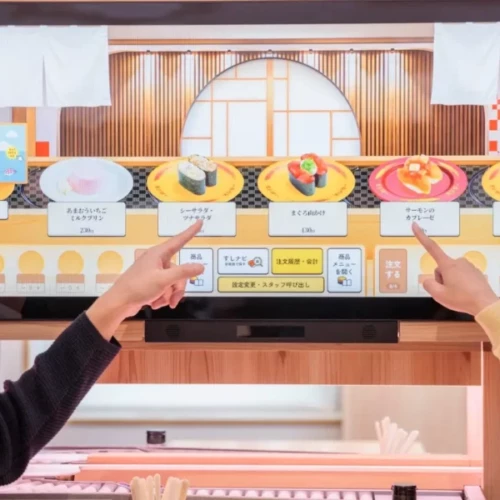
How do I make a reservation at Sushiro? Can I do it online?

Tesla Bot Optimus Release Date & Price: The 2026 Guide to Elon Musk’s Humanoid Robot

EXPO2025 Futures Complete Guide: 2026 Dates, Tickets & Drone Show Revival in Osaka

Yokohama GREEN×EXPO 2027 Complete Guide: Dates, Tickets, and Access
On the lifestyle web magazine "Minna no Rakuraku Magazine",
we update useful tips and deals every month. Please bookmark us!
- Grok 4.6 Ultimate Guide: Pricing, Benchmarks, and Top Features (August 2026)
- Is Twitter Really Back? The Legal and Technical Reality Behind Twitter.now (August 2026)