


Is Chat Dead? Inside OpenAI’s ChatGPT Super App Overhaul & IPO Strategy
[This article may contain PR]
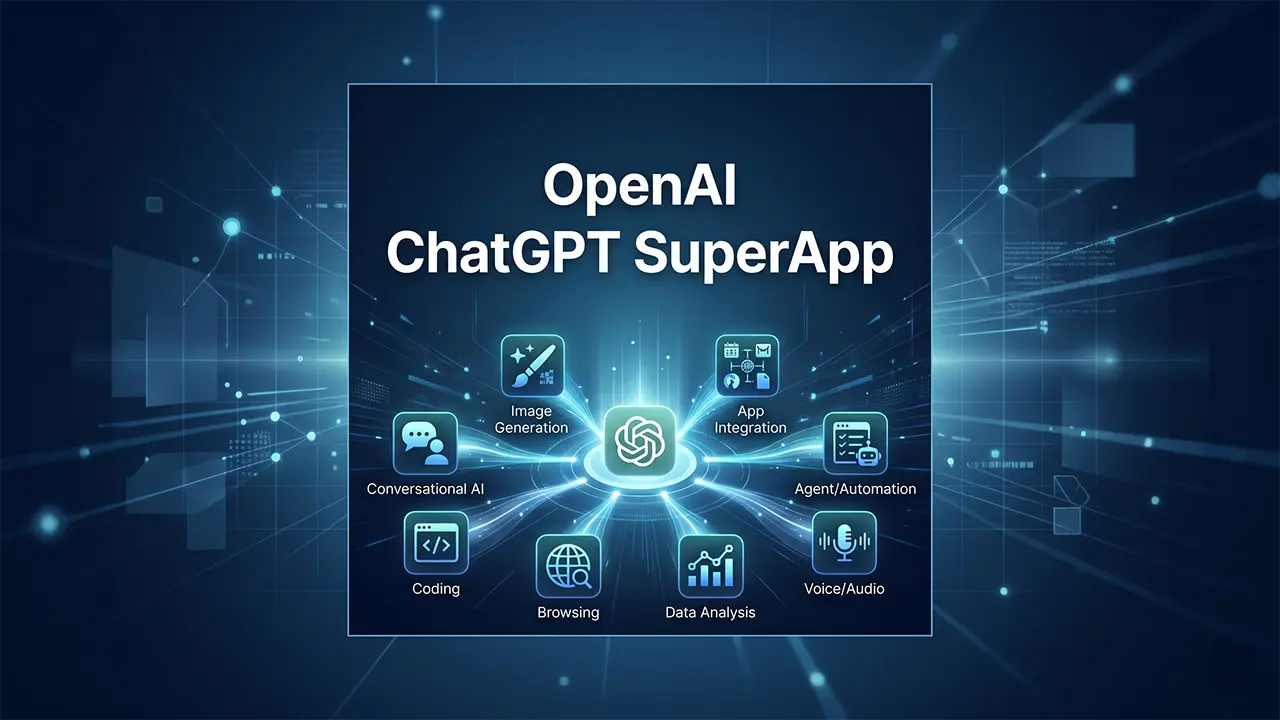

In June 2026, reports revealed that OpenAI is planning its most significant platform overhaul since the launch of ChatGPT. The company is transitioning ChatGPT from a simple conversational chatbot into a comprehensive “Super App”—an all-in-one digital workspace that natively integrates coding tools, third-party applications, and autonomous AI agents. Driven by an upcoming Initial Public Offering (IPO) and a goal to capture the enterprise market, internal sentiment at OpenAI suggests that the era of simple chat is over, encapsulated by the phrase “chat is dead”.
Key Takeaways
- The Super App Pivot: ChatGPT is evolving into a centralized hub that bundles autonomous AI agents, external partners, and the Codex programming tool.
- Enterprise-Driven IPO Strategy: OpenAI aims to generate 50% of its total revenue from enterprise clients by the end of 2026, pushing the platform to become a robust business operating system.
- Autonomous Workflows: AI agents will soon operate 24/7 in the background, capable of executing multi-step tasks without requiring continuous human prompts.
- Enhanced Security: A newly introduced “Lockdown Mode” mitigates data exfiltration and prompt injection risks by restricting live web browsing and agent autonomy for sensitive enterprise data.
- What is the ChatGPT Super App Update?
- Codex Integration & Mobile Accessibility
- Autonomous AI Agents
- Third-Party App Ecosystem
- A Prompt-less Future
- Why Now? The IPO and Enterprise Market Push
- ChatGPT vs. Claude vs. Google Gemini
- Security First: The Introduction of Lockdown Mode
- Frequently Asked Questions (FAQ)
What is the ChatGPT Super App Update?
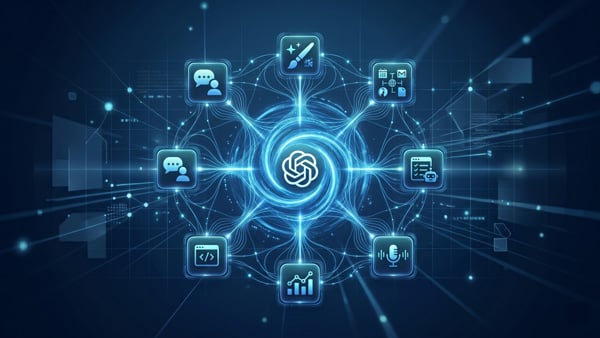
The ChatGPT Super App represents a structural shift from a text-generation tool to an autonomous, multi-functional platform. The core advancements of this overhaul include:
Codex Integration & Mobile Accessibility
OpenAI’s AI programming tool, Codex—which boasts 5 million weekly users—is being fully integrated into ChatGPT. This allows both software developers and general business professionals to conduct data analysis and prototype applications seamlessly across desktop and mobile devices.
Autonomous AI Agents
Instead of waiting for manual user prompts, AI agents will run in the background around the clock. These agents can handle complex, multi-step operations—such as cross-referencing data, compiling reports, and emailing stakeholders—autonomously.
Third-Party App Ecosystem
External services like Canva for graphic design and Booking.com for travel reservations are being built directly into the ChatGPT interface, eliminating the need to toggle between different applications.
A Prompt-less Future
OpenAI’s long-term vision is to move beyond detailed prompting. The models will intelligently anticipate user intent and proactively suggest or execute the best course of action.
To understand the financial and strategic motives behind this massive platform shift, watch this expert breakdown of OpenAI’s long-term goal to challenge existing big tech ecosystems.
Video Summary & Key Insights: According to a market strategic expert on NewsX World, OpenAI’s Super App transformation is a calculated move ahead of a potential IPO to challenge and eventually replace traditional tech ecosystems like Google and Amazon. By becoming the single digital workspace for search, productivity, and digital services, OpenAI aims to aggressively monetize its platform and dominate the enterprise IT and OS market over the next 5 to 8 years.

Why Now? The IPO and Enterprise Market Push

This massive update is fundamentally a strategic maneuver to maximize OpenAI’s valuation ahead of an impending IPO and to reclaim market share from tech giants like Google. There are three main drivers behind this timeline:
1. Proving Sustainable Monetization
To satisfy Wall Street investors, OpenAI must demonstrate a highly profitable and sustainable business model. Relying on low-cost consumer subscriptions is insufficient; the company needs the high retention and premium pricing associated with enterprise SaaS contracts.
2. Capturing the Enterprise OS Market
OpenAI aims to position ChatGPT as an all-in-one operating system for businesses. Currently, 40% of their revenue comes from enterprise clients, and the target is to push this past 50% by the end of 2026.
3. Resource Reallocation
By scaling back the development of consumer-oriented products like Sora, OpenAI is funneling its top engineering talent into building enterprise-grade AI agents, signaling that B2B dominance is their absolute priority.
ChatGPT vs. Claude vs. Google Gemini
OpenAI is facing intense competition from Google Gemini, which dominates via its native integration with Google Workspace, and Anthropic’s Claude, which is heavily favored for specialized coding tasks and safety. OpenAI’s counter-strategy is absolute convenience—ensuring all workflows can be completed within the ChatGPT interface.
| Feature / Strategy | ChatGPT (Super App) | Claude (Anthropic) | Google Gemini |
|---|---|---|---|
| Core Strategy | Unified “Super App” for all tasks | High accuracy & task-specific safety | Integration with existing corporate IT infrastructure |
| Key Strengths | Task automation, 3rd-party integrations (Canva, etc.) | Complex document analysis, superior coding assistance | Deep Google Workspace synergy, daily workflow enhancement |
| Enterprise Perception | The “New OS” for digital workspaces | A highly reliable “specialized assistant” | A seamless extension of current infrastructure |
While the Super App model offers unparalleled convenience by reducing the need for multiple software subscriptions, it also introduces the risk of vendor lock-in and potential single points of failure for businesses.

Security First: The Introduction of Lockdown Mode

As AI agents gain the ability to communicate with external web services and access internal corporate data, the risk of cyberattacks—specifically prompt injection and unauthorized data exfiltration—exponentially increases.
To mitigate these threats, OpenAI has introduced a stringent security feature known as “Lockdown Mode”. This feature is specifically designed for organizations handling highly sensitive information. In Lockdown Mode, OpenAI forces the AI into a restricted environment by disabling live web browsing, blocking web image retrieval, and turning off autonomous agent capabilities.
By strictly limiting the AI’s operational scope, Lockdown Mode ensures that malicious users cannot trick the model into pulling or leaking confidential corporate data. For IT leaders and enterprise clients, the primary challenge moving forward will be carefully balancing the massive productivity gains of AI agents with the rigorous security controls required to protect their data.

Frequently Asked Questions (FAQ)
Q1: What does the ChatGPT Super App update mean for everyday users?
The update transforms ChatGPT from a simple conversational bot into a centralized digital workspace. Instead of switching between different applications, users will be able to write code, design graphics, and book travel directly through ChatGPT’s interface, powered by autonomous AI agents.
Q2: Is “Chat is dead” an official OpenAI announcement?
No, “chat is dead” is reported to be a prevailing internal sentiment at OpenAI. It reflects the company’s strategic pivot away from purely conversational text interfaces toward building proactive, agent-driven systems that can autonomously complete multi-step tasks.
Q3: How does Lockdown Mode protect enterprise data?
Lockdown Mode defends against prompt injection attacks and unauthorized data exfiltration by restricting the AI model’s access to the internet. It disables live web browsing and turns off agent capabilities, thereby minimizing the pathways malicious actors can use to compromise sensitive information.
Q4: Why is OpenAI focusing so heavily on enterprise clients right now?
OpenAI is preparing for an Initial Public Offering (IPO) and needs to demonstrate a highly profitable, sustainable business model to investors. By expanding its enterprise base—aiming for 50% of total revenue by the end of 2026—the company can secure high-value, long-term contracts that are more stable and lucrative than individual consumer subscriptions.

Gemini 3.8 Flash Pricing: Why a Flat Token Rate Means a 40% Higher Bill
Is Twitter Really Back? The Legal and Technical Reality Behind Twitter.now (August 2026)
Grok 4.6 Ultimate Guide: Pricing, Benchmarks, and Top Features (August 2026)
Google Drops Gemini 3.6 Flash: High-Speed Agentic AI Beats Claude and GPT in PC Control (July 2026)
OpenAI GPT-5.6 Sol, Terra, and Luna: Complete Pricing, Features, and ChatGPT Work vs. Claude Fable 5 Comparison
GPT-5.5 Explained: Features, Pricing, and How OpenAI’s Autonomous Agent Compares to Claude 4.7
On the lifestyle web magazine "Minna no Rakuraku Magazine",
we update useful tips and deals every month. Please bookmark us!
- The Complete Guide to NVIDIA RTX Spark: Specs, Pricing, and the Reality of Arm Compatibility
- Sakana Fugu AI Review: Is This Multi-Agent Orchestrator the Ultimate Claude Fable 5 Alternative?