


The Complete Guide to NVIDIA RTX Spark: Specs, Pricing, and the Reality of Arm Compatibility
[This article may contain PR]
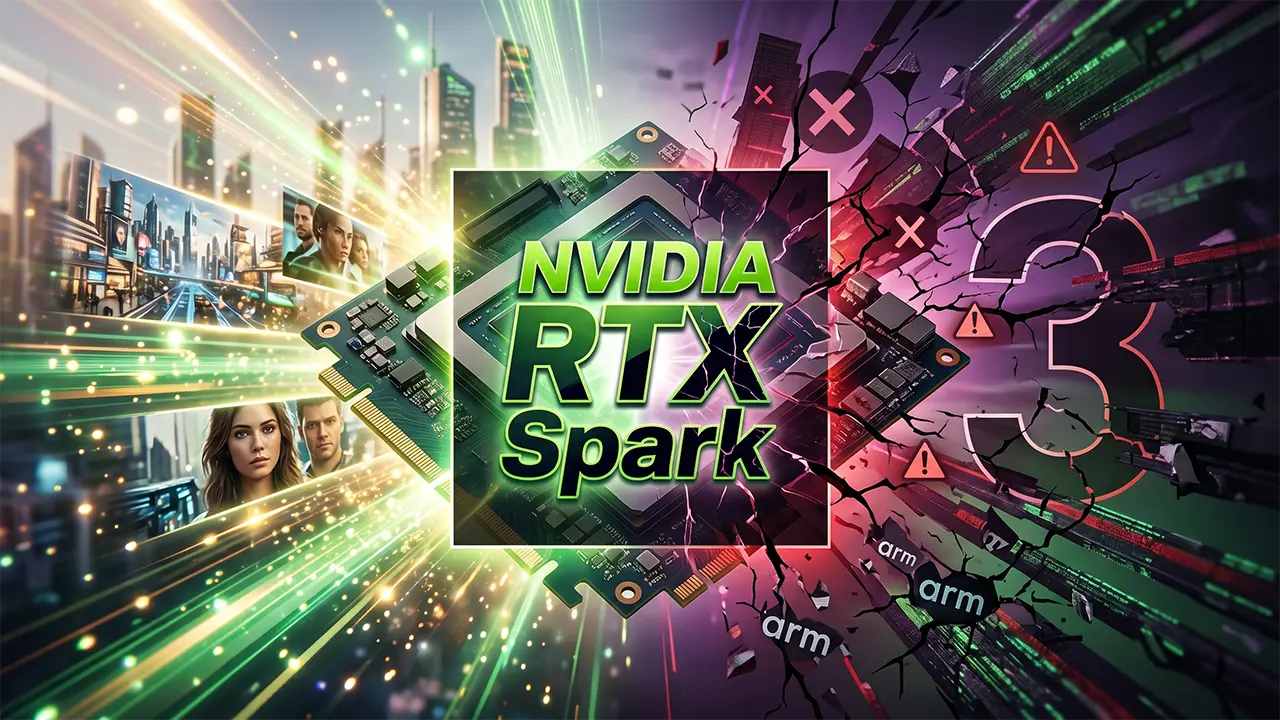

A new era of personal computing has arrived, but is it right for you? Co-developed by NVIDIA and Microsoft, the newly announced RTX Spark is an Arm-based superchip designed to transform the traditional Windows PC into an autonomous AI “teammate”. While its specifications are groundbreaking, adopting a new architecture brings valid concerns—especially regarding extreme pricing and software compatibility. This guide cuts through the marketing to provide a realistic look at what the RTX Spark actually offers.
Key Takeaways
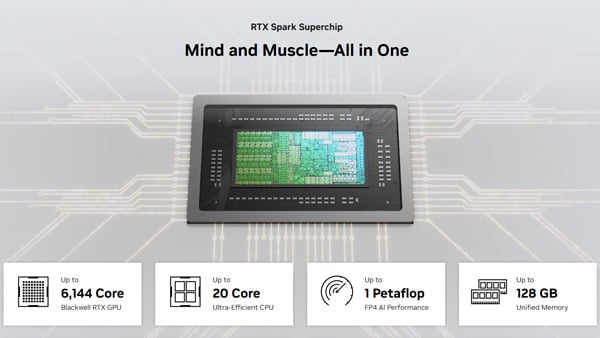
- Local AI Powerhouse: The RTX Spark is a System-on-a-Chip (SoC) integrating a 20-core Arm CPU, an RTX GPU with 6,144 CUDA cores, and up to 128GB of unified memory to run massive AI models locally.
- Fall 2026 Release: Premium laptops and compact desktops from brands like ASUS, Dell, HP, and Microsoft Surface will launch this fall.
- The Arm Compatibility Catch: While basic apps run fine, kernel-level software like gaming anti-cheats struggle on the Arm architecture, meaning this is not a perfect replacement for an x86 gaming rig yet.
- High Cost of Entry: Advanced TSMC 3nm manufacturing and massive memory pools lead experts to expect premium entry prices starting well over $2,000.
- What is the NVIDIA RTX Spark? The Next-Gen AI Chip Reinventing Windows PCs
- Release Date, Participating Manufacturers, and Pricing Expectations
- Who Should Buy an RTX Spark PC? (Pros & Cons by Use Case)
- The Arm Architecture Bottleneck: Why Compatibility is Still Far from "Perfect"
- Will Extreme Pricing Prevent Mainstream Adoption?
- Learning from the Past: Overcoming the Tegra 3 Failure
- How It Compares: NVIDIA vs. Intel, AMD, and Apple Silicon
- Frequently Asked Questions (FAQ)
What is the NVIDIA RTX Spark? The Next-Gen AI Chip Reinventing Windows PCs
(Source: NVIDIA)
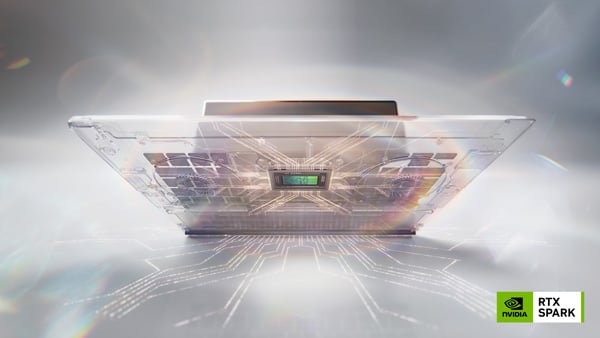
The NVIDIA RTX Spark fundamentally changes PC hardware by utilizing a System-on-a-Chip (SoC) design. Instead of keeping the CPU and GPU separate, NVIDIA fused a 20-core Arm-based “Grace” CPU (co-developed with MediaTek) and a “Blackwell” RTX GPU via an ultra-high-speed interface.
Unprecedented AI Performance and Architecture
- Massive Unified Memory: With up to 128GB of shared memory, the RTX Spark eliminates data transfer bottlenecks between the CPU and GPU.
- 1 Petaflop of AI Compute: This chip brings data-center-level computational power to personal devices, allowing users to run 120-billion parameter Large Language Models (LLMs) completely offline and secure.
What you will learn from this video: NVIDIA’s vision for the next-generation PC experience and a visual breakdown of the RTX Spark’s foundational design.
Video Key Takeaways: The demonstration highlights the shift from PCs as mere tools to autonomous AI agents, showcasing how the integration of an RTX GPU, Grace CPU, and 128GB of unified memory enables rapid, local AI generation for creative workflows without relying on the cloud.

Release Date, Participating Manufacturers, and Pricing Expectations
(Source: NVIDIA)
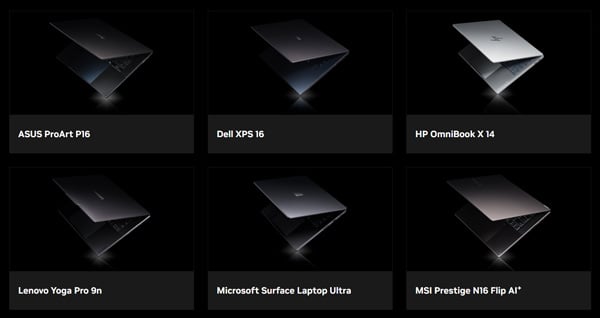
RTX Spark-powered devices will hit the market in the Fall of 2026.
- First Wave Brands: ASUS, Dell, HP, Lenovo, Microsoft Surface, and MSI.
- Subsequent Brands: Acer and GIGABYTE.
While NVIDIA has not announced official MSRPs, the components used—such as the bleeding-edge TSMC 3nm process, massive memory limits, and premium OLED displays—point to a very high cost. Based on the pricing of its professional counterpart, the DGX Spark, reviewers anticipate these consumer machines will start at roughly $2,000 and scale up significantly.

Who Should Buy an RTX Spark PC? (Pros & Cons by Use Case)
(Source: NVIDIA)
The RTX Spark offers incredible local processing, but it is not a one-size-fits-all solution.
Ideal Users: AI Developers and Creators
- AI Researchers: The 128GB memory capacity is a game-changer, allowing massive AI models to be trained and run locally, keeping proprietary data secure.
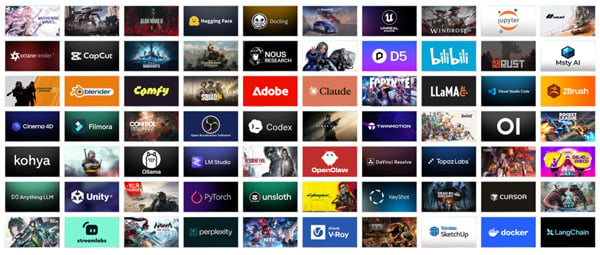
- Creative Professionals: Adobe is actively re-architecting applications like Premiere Pro and Photoshop for the RTX Spark, doubling the speed of AI features and graphical processing.
Users Who Should Wait: Pure PC Gamers
- While it boasts an RTX 5070-class GPU, the inherent compatibility issues of the Arm architecture make it a risky primary investment for hardcore gamers.

The Arm Architecture Bottleneck: Why Compatibility is Still Far from “Perfect”
(Source: NVIDIA)
For decades, Windows PCs have relied on the x86 architecture dominated by Intel and AMD. Because the RTX Spark uses the Arm architecture, it requires a software translation layer to run traditional x86 applications.
- What Works: Thanks to Microsoft’s improved “Prism” emulator, over 95% of standard business apps and web browsers run smoothly.
- What Fails: NVIDIA’s claim of “100% compatibility” is an overstatement. Games that rely on kernel-level anti-cheat software (such as PUBG or Battlefield) frequently fail to launch on Arm architectures.
What you will learn from this video: A deep dive into the harsh reality of Arm compatibility and why NVIDIA’s claims of seamless gaming are highly questionable.
Video Key Takeaways: This analysis points out the severe limitations of Arm architecture for gaming, specifically highlighting that kernel-level anti-cheat systems do not easily support Arm, meaning many popular competitive multiplayer games will likely crash or fail to run on RTX Spark devices at launch.

Will Extreme Pricing Prevent Mainstream Adoption?
There is a growing concern that extreme pricing will severely limit the RTX Spark’s mainstream adoption. The AI boom has already driven flagship desktop GPU prices to exorbitant levels. Creating an all-in-one 3nm SoC with massive memory ensures high manufacturing costs. Consequently, the RTX Spark may become an overpriced luxury item accessible only to wealthy professionals, failing to penetrate the broader consumer PC market.
What you will learn from this video: A PC hardware expert’s hands-on review of the RTX Spark laptops, comparing them directly to Apple Silicon while questioning the unannounced metrics.
Video Key Takeaways: Tech reviewers praise the incredibly thin chassis of RTX Spark laptops and the seamless hardware integration. However, they raise significant concerns about NVIDIA’s silence regarding actual CPU performance benchmarks, power consumption, and exact battery life.
Learning from the Past: Overcoming the Tegra 3 Failure
Fourteen years ago, NVIDIA attempted to enter the PC market with the “Tegra 3” Arm processor, which failed entirely due to a lack of compatible Windows apps. Today’s approach is different:
- Advanced Emulation: Microsoft’s Prism handles legacy x86 apps effectively.
- The CUDA Ecosystem: NVIDIA brings its world-class AI software foundation (CUDA) directly to Windows.
- Deep OS Integration: Built-in security layers like “NVIDIA OpenShell” allow AI agents to run safely natively within Windows.

How It Compares: NVIDIA vs. Intel, AMD, and Apple Silicon

NVIDIA’s entry violently disrupts the Intel/AMD x86 duopoly and directly challenges Apple’s M-series chips.
| Feature | NVIDIA RTX Spark | Traditional PCs (Intel/AMD) | Apple Silicon (Mac) |
|---|---|---|---|
| Foundation | Arm + NVIDIA GPU | x86 + dGPU / iGPU | Custom Arm-based SoC |
| Biggest Strength | Local AI, Massive Unified Memory | Perfect 100% x86 Game Compatibility | Power Efficiency & Tight Ecosystem |
| AI Processing | Raw GPU Power & CUDA | Phased NPU Integration | Neural Engine |
| Memory Structure | Up to 128GB Unified | Separate CPU / GPU Memory | Up to 128GB+ Unified |
Frequently Asked Questions (FAQ)
Q: Can I build my own custom desktop with an RTX Spark chip?
A: No. The RTX Spark is a highly integrated System-on-a-Chip (SoC) where the CPU, GPU, and RAM are combined. It will only be available in pre-built laptops and compact desktop PCs from official partner brands.
Q: Will the RTX Spark run all my PC games?
A: Not necessarily. While it has the raw graphical power of an RTX 5070-class GPU, the Arm architecture means it relies on emulation for x86 games. Popular multiplayer games utilizing kernel-level anti-cheat software will likely face severe compatibility issues.
Q: How much will an RTX Spark laptop cost?
A: While NVIDIA has not released official pricing, industry experts anticipate that due to the advanced 3nm manufacturing process and premium memory configurations, entry-level models will start at approximately $2,000.
Q: Is the RTX Spark better than Apple Silicon (M3/M4)?
A: It depends on your workflow. If you rely on NVIDIA’s CUDA ecosystem for AI development or intensive 3D rendering, the RTX Spark offers a massive advantage on Windows. However, Apple Silicon still maintains a highly refined ecosystem with proven battery efficiency.

Nvidia NTC Explained: How AI Cuts VRAM Usage by 85% and Saves 8GB GPUs
Gemini 3.8 Flash Pricing: Why a Flat Token Rate Means a 40% Higher Bill
Grok 4.6 Ultimate Guide: Pricing, Benchmarks, and Top Features (August 2026)
Google Drops Gemini 3.6 Flash: High-Speed Agentic AI Beats Claude and GPT in PC Control (July 2026)

OpenAI GPT-5.6 Sol, Terra, and Luna: Complete Pricing, Features, and ChatGPT Work vs. Claude Fable 5 Comparison

Sakana Fugu AI Review: Is This Multi-Agent Orchestrator the Ultimate Claude Fable 5 Alternative?
On the lifestyle web magazine "Minna no Rakuraku Magazine",
we update useful tips and deals every month. Please bookmark us!
- RUNNING TRAIN on Steam: The Ultra-Realistic Japanese Train Simulator – PC Specs, Controllers, and AI Driving Explained
- Is Chat Dead? Inside OpenAI’s ChatGPT Super App Overhaul & IPO Strategy